Scaling Group Dynamics with Intelligent Routing
Seamless Exploration
The Starting Point
I like traveling, but I can't read maps. For years I let others navigate and felt guilty for it. When I switched to audio navigation, something shifted: I stopped staring at my phone and started actually seeing where I was.
The real breaking point came when my older sister wanted a trip. My younger sister wanted to be part of the planning. She had ideas she had been collecting for weeks, all waiting to be sorted into something coherent. And none of it could reach the third sister yet, because the whole thing was a surprise. Three people, three different roles, one plan that had to work for all of them. One sister is vegetarian and love vintage. I rely on audio and like food. The youngest had a list of ideas we needed to collect first and decide on together in the evening, before the next day's route was set.
I was so focused on the logistics that I almost forgot why we were going in the first place.
And afterward: I could barely remember what we had actually done. The only way to piece it together was scrolling through Reels someone else had posted.
Every feature in WalkWith came from a moment where something broke. This is that story.
The Problem
Logistically, too many options create paralysis before the trip even starts. Real-world conditions collapse even the best-prepared plan. When the navigator's battery dies, the group scrambles: Passing phones around, hunting for a charging station, hoping someone brought a power bank. None of these are real solutions.
Socially, in every group one person ends up responsible for all decisions. They track the route, mediate between competing ideas, and carry the mental load while everyone else is present. That person isn't enjoying the trip. They're managing it.
Dead navigator,
lost group
Many opinions,
no decision

Eyes down,
experience missed
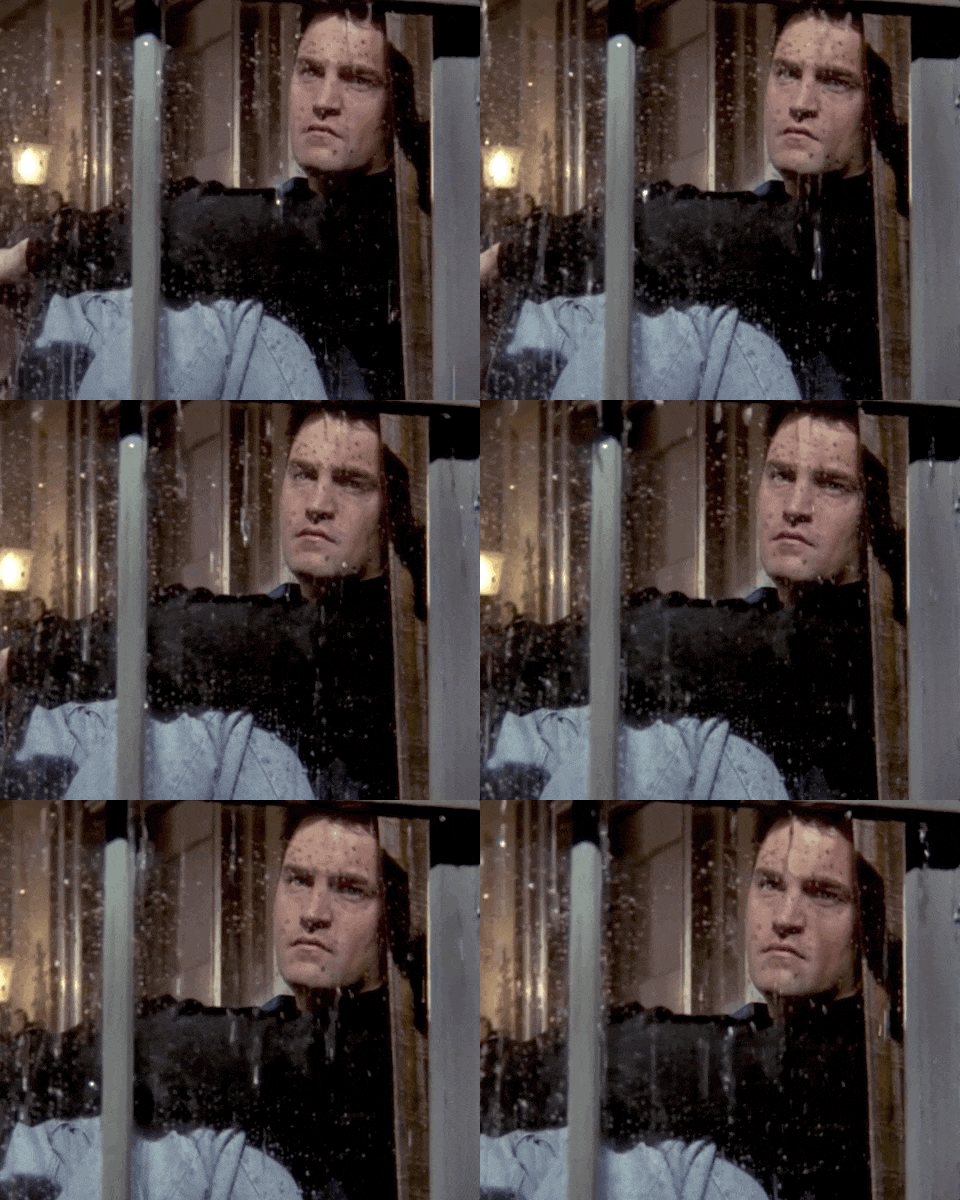
Hours of planning, one rain kills it
The Insight
Most navigation apps solve the wrong problem. They get you from A to B, but they don't account for the fact that in a group, the biggest friction isn't geographic. It's social.
WalkWith is built on a different premise: Seamless exploration requires orchestrating people, not just paths. And the best navigation experience is one where the navigator barely has to look at their phone.
Partner integrations like NeoTaste are part of this logic. A recommendation that appears because your group needs a vegetarian restaurant right now is not advertising. It's the app doing its job.
My Role
Self-initiated concept project. Informal usability walkthroughs with friends across solo and group travel contexts. AI was used selectively: As a first visual draft on complex screens, and for scenario simulation. Every screen where emotional design or accessibility hierarchy was central, I designed from scratch.
💡
Strategy &
System Design
🛠️
High-Fidelity UI & Prototyping
⚙️
AI
Orchestration
The System
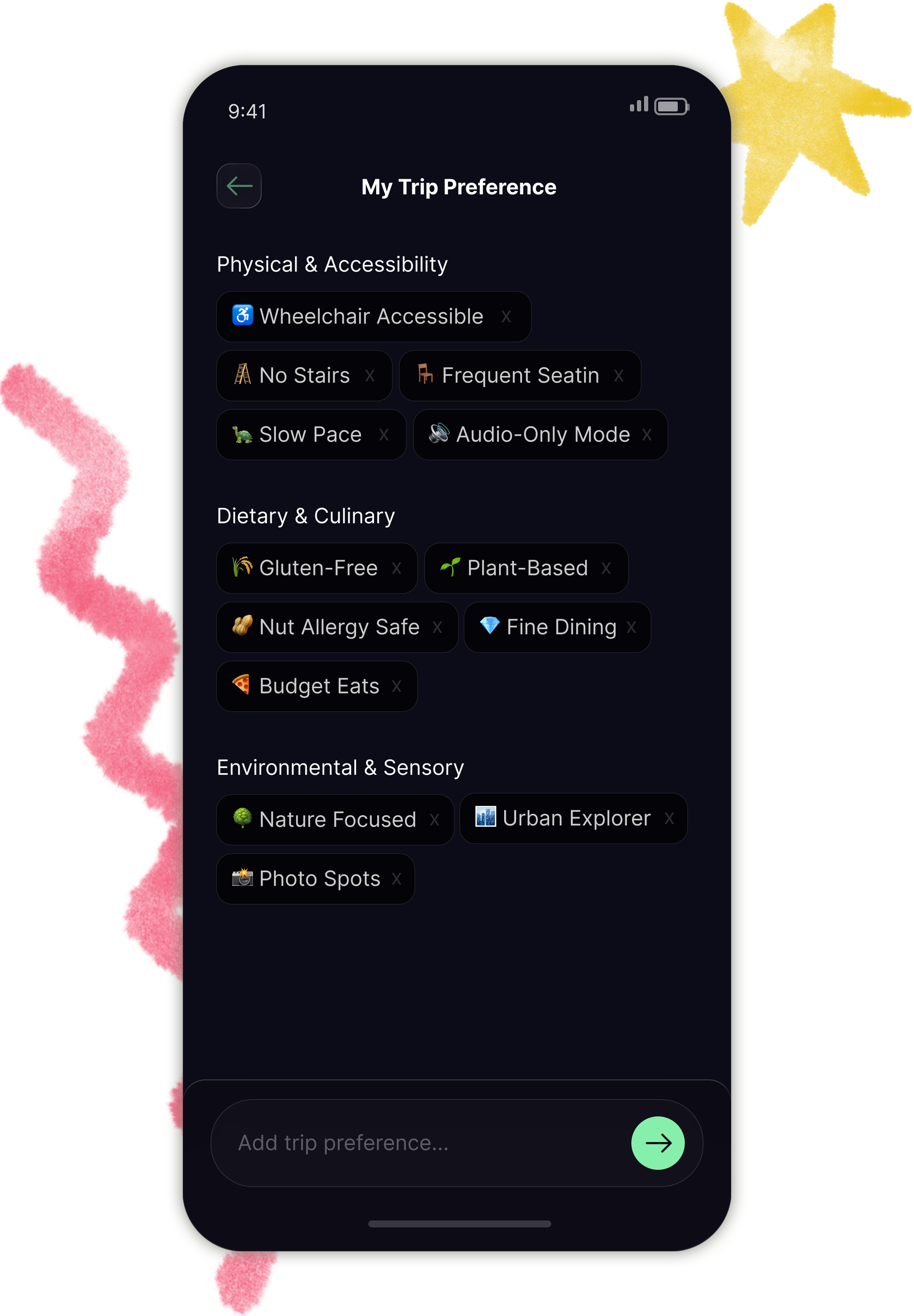
Phase A • Profiling & Smart Logic
My sister is vegetarian. Every time we looked for a place to eat, someone had to remember to mention it. Sometimes they forgot. Then we had to start over.
Rather than a flat preferences form, I built a tagging system that separates hard exclusions from soft interests.
Hard exclusions are things that don't change:
e.g. wheelchair accessibility.
Soft interests are contextual: In Japan you rely on public transit because the distances are large and the Shinkansen is faster than walking. In a smaller city you might prefer to explore on foot. The tags can be adjusted spontaneously as the context changes.
These preferences act as global variables. When my sister joins the group, her vegetarian preference is already part of the planning logic. No one has to remember to mention it.
Battery Handoff: When the Admin's device drops below 15%, the Co-Admin receives a notification and automatically becomes the main navigator. The whole group sees the handoff. The Co-Admin is assigned before the trip or changed spontaneously during it.
This role exists because automatic handoff to whoever has the highest battery creates a different problem: The wrong person suddenly has the responsibility.
Someone who doesn't want to navigate, or isn't paying attention, shouldn't become the group's navigator by accident. The Co-Admin is a conscious choice made in advance.
Both Admin and Co-Admin can modify the route and initiate votes. Other group members can submit location ideas but cannot change the route directly. Everyone can follow along passively.
Phase B • The Planning Engine
Planning a trip for three people with different preferences meant hours of research before we even left. By the time we had a plan, we were already tired.
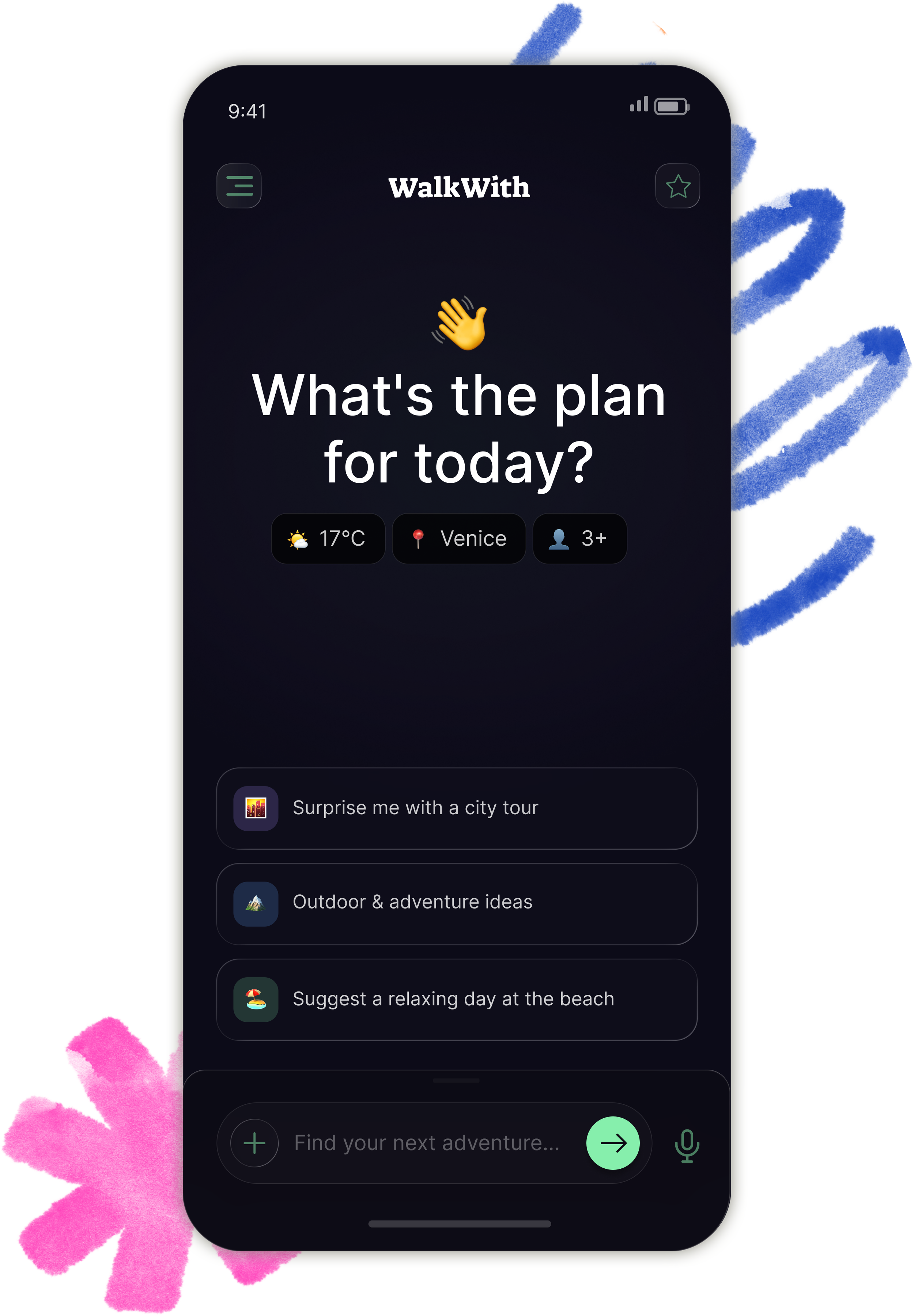
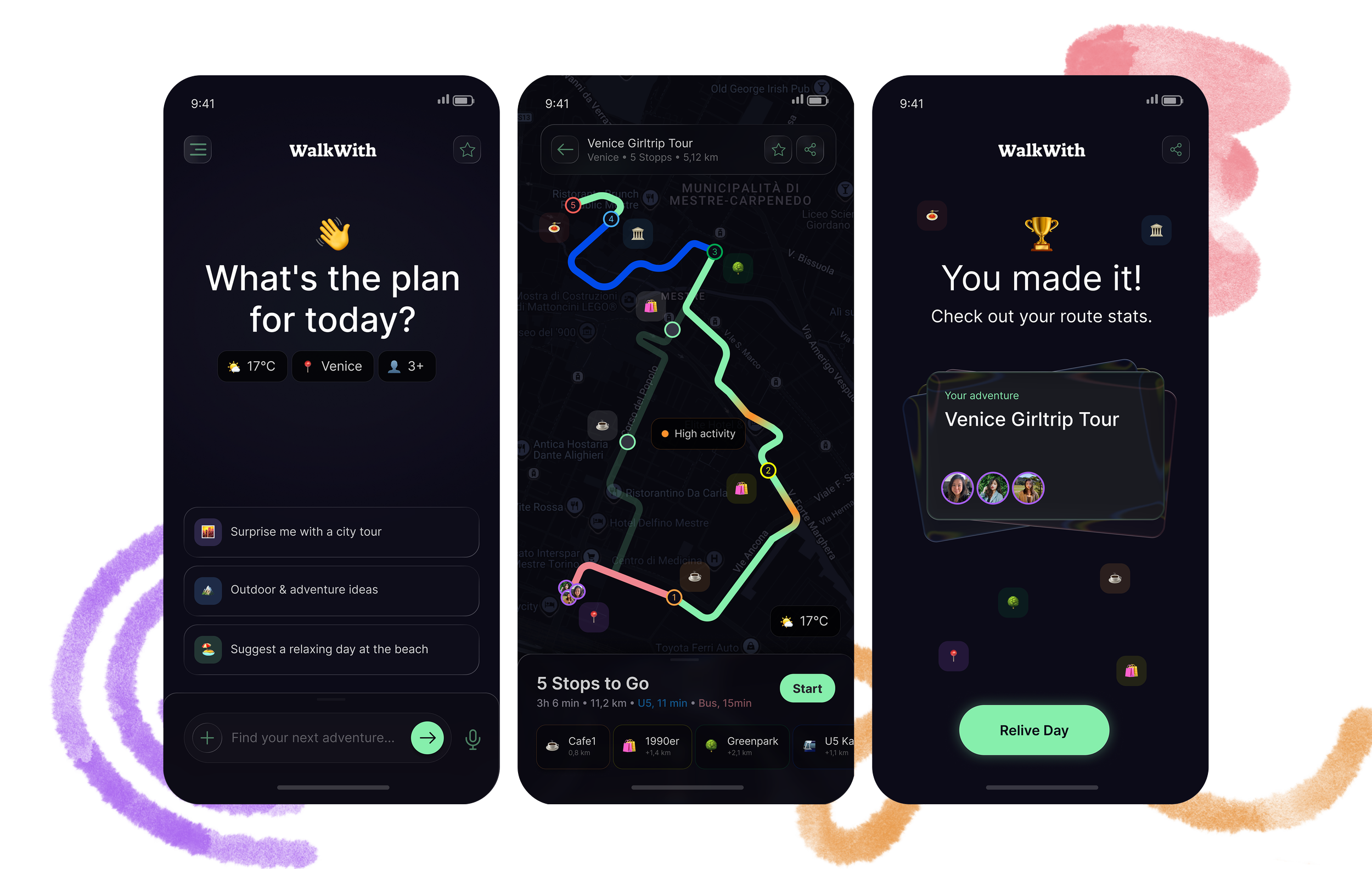
The Mood Mixer offers three AI-prepared paths as entry points instead of an open search field.
The NLP interface (Natural Language Interface) accepts typed or spoken. The system applies every group member's stored preferences automatically and generates an optimized route.
The proposal is not fixed. The group can zoom into the map, see recommendations along the way, and adjust stops before moving. Partner recommendations via NeoTaste appear as direct responses to stated preferences. The suggestion surfaces as a solution, not an interruption.
Phase C • Active Experience
This is where plans meet reality. And reality always wins.
In Japan, my feet gave out after hours of walking between stops. I didn't want to rebuild the entire route. I just wanted to take the train for the next leg and keep going. That moment became the Transit-Pivot.
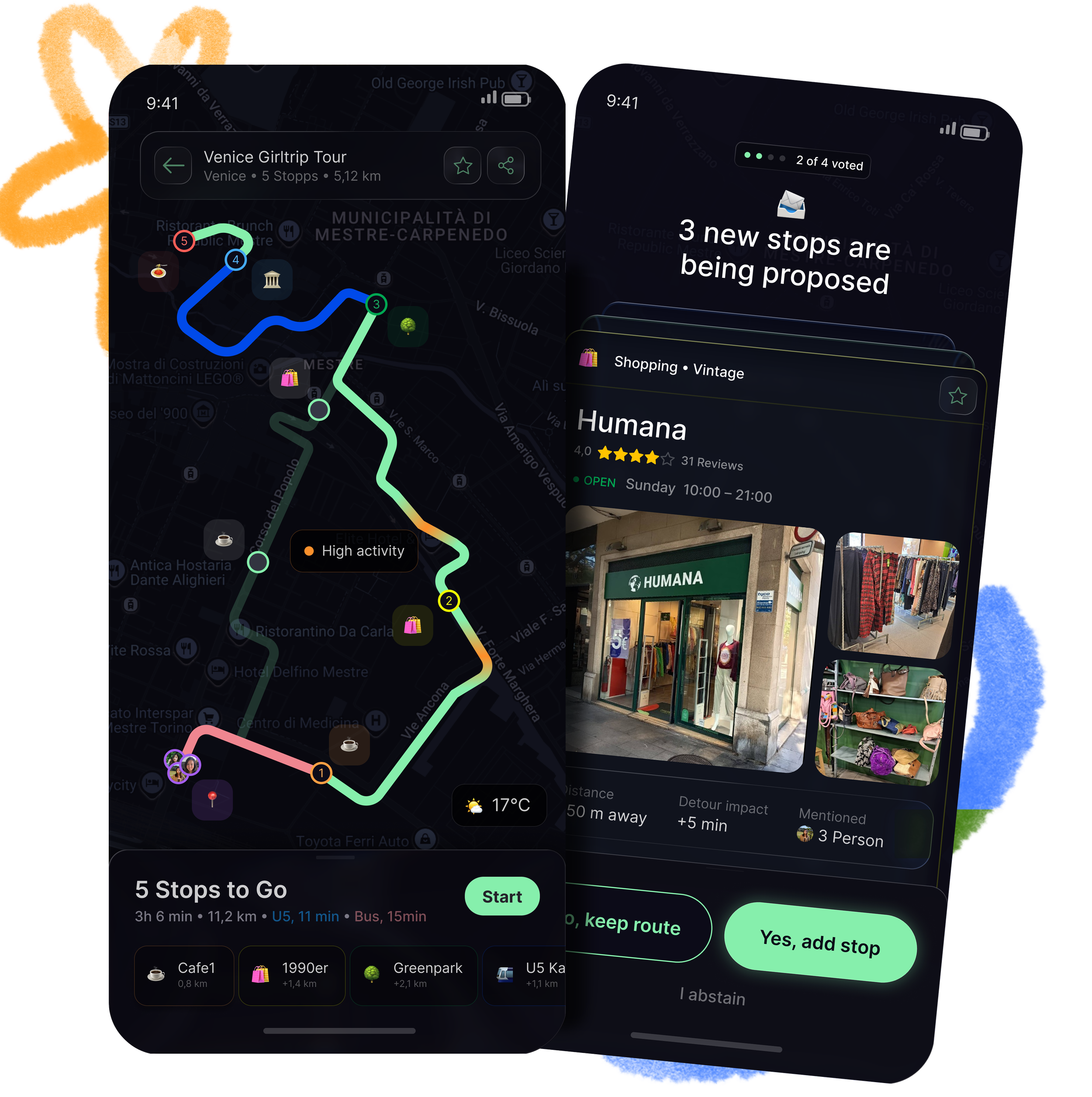
In a group of ten people, someone always has a strong opinion about where to go next. And whoever speaks loudest usually wins, not whoever has the best idea. That became Anonymous Voting.
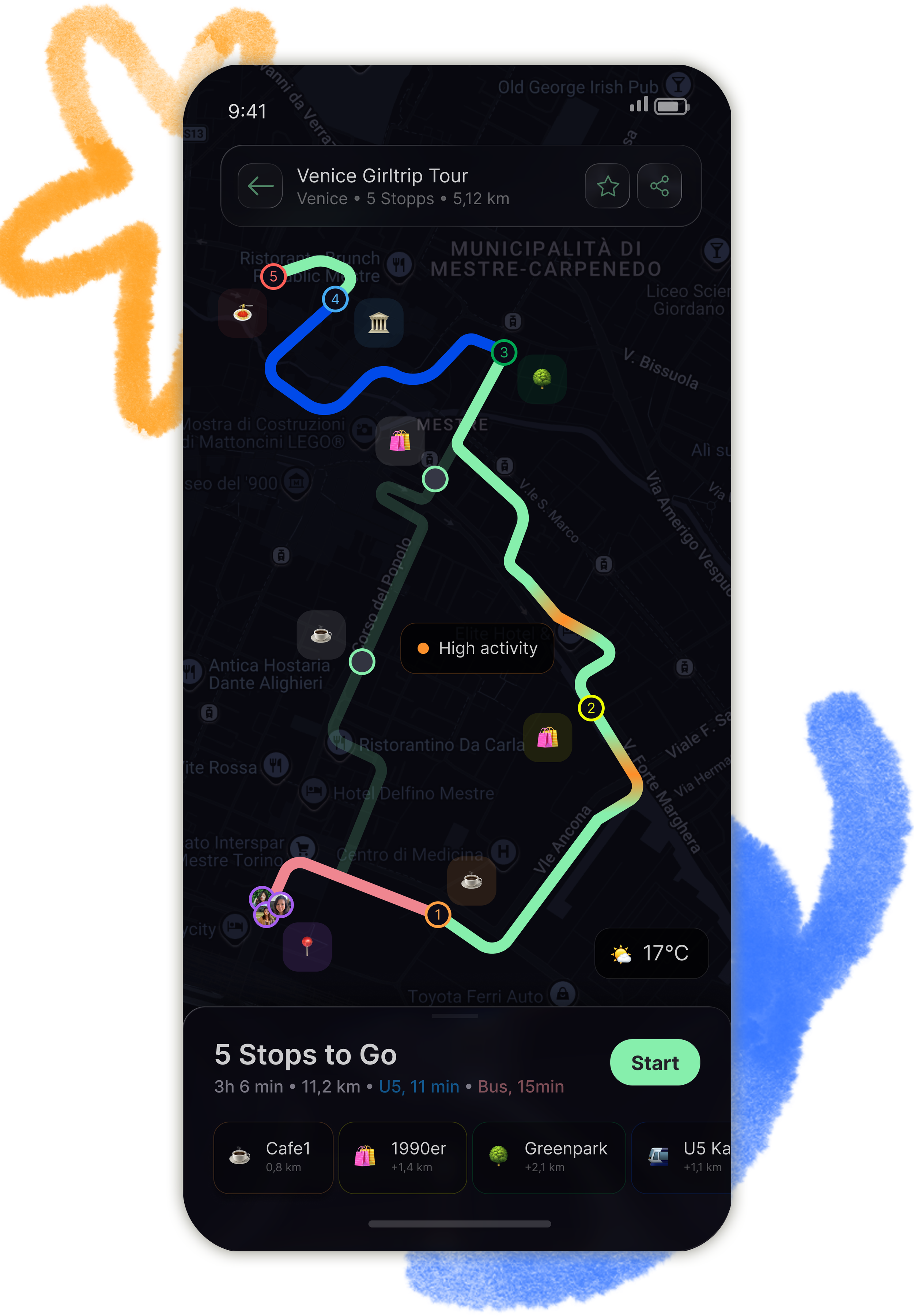
And every time I navigated for a group, I was the one staring at my phone while everyone else was looking at the city. That became the Eyes-Up principle behind the entire Route Guide UI.
Anonymous Voting: When the group wants to change direction, proposals appear as swipeable cards without revealing who suggested them. The Tinder-style format came from a specific realization: In a large group, there are always at least two or three competing ideas at the same time. A single-card layout would hide that. The swipeable format makes the volume visible and the decision fast.
Only Admin and Co-Admin can send route changes or initiate a vote. Other group members can submit a location idea, which enters the voting pool. Everyone can follow passively.
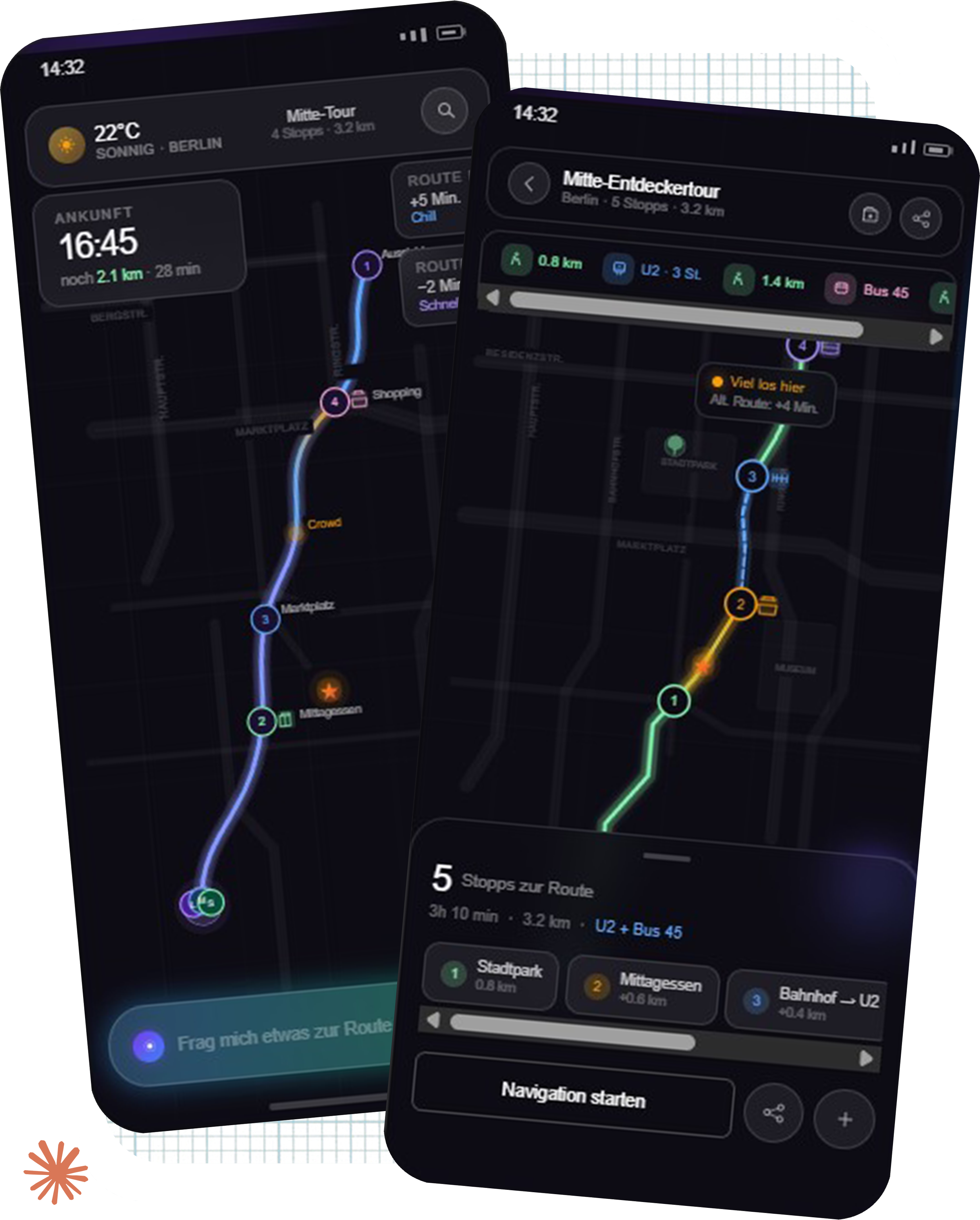
Transit-Pivot: The connections between stops are interactive. One tap switches between walking and public transit. Arrival times update for the entire group in the background, without restarting navigation. The route doesn't collapse. The group keeps moving.
Eyes-Up Navigation: Secondary information like weather sits bottom right, not center screen. The hierarchy is built for motion: Readable in under two seconds, in poor light, without stopping. The goal is simple: Put the phone away as fast as possible.
Phase D • Achievement & Memory
After every trip, I forget what we actually did. Too many stops, too many days. The details disappear. I end up scrolling through someone else's Reels to piece together my own experience.
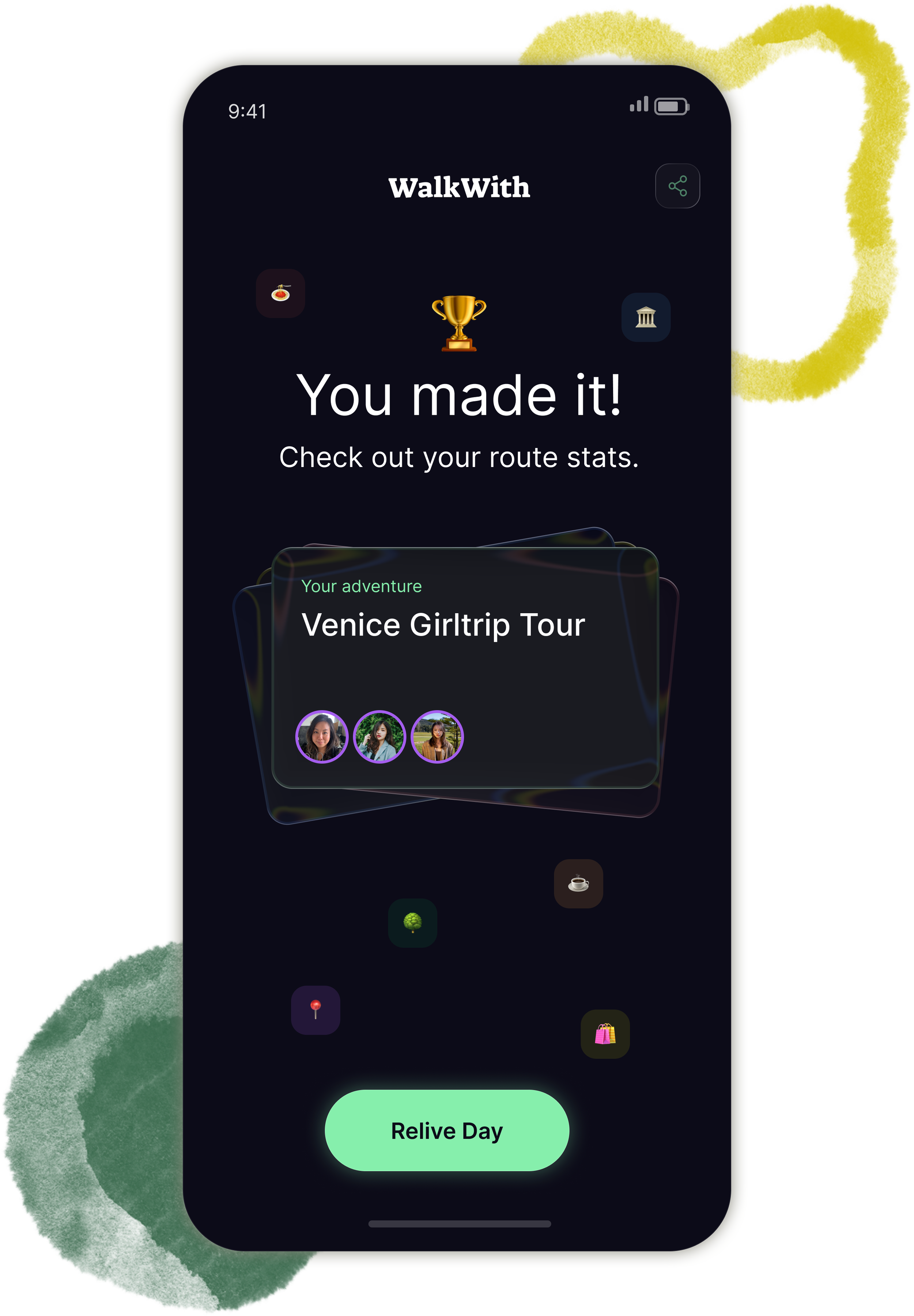
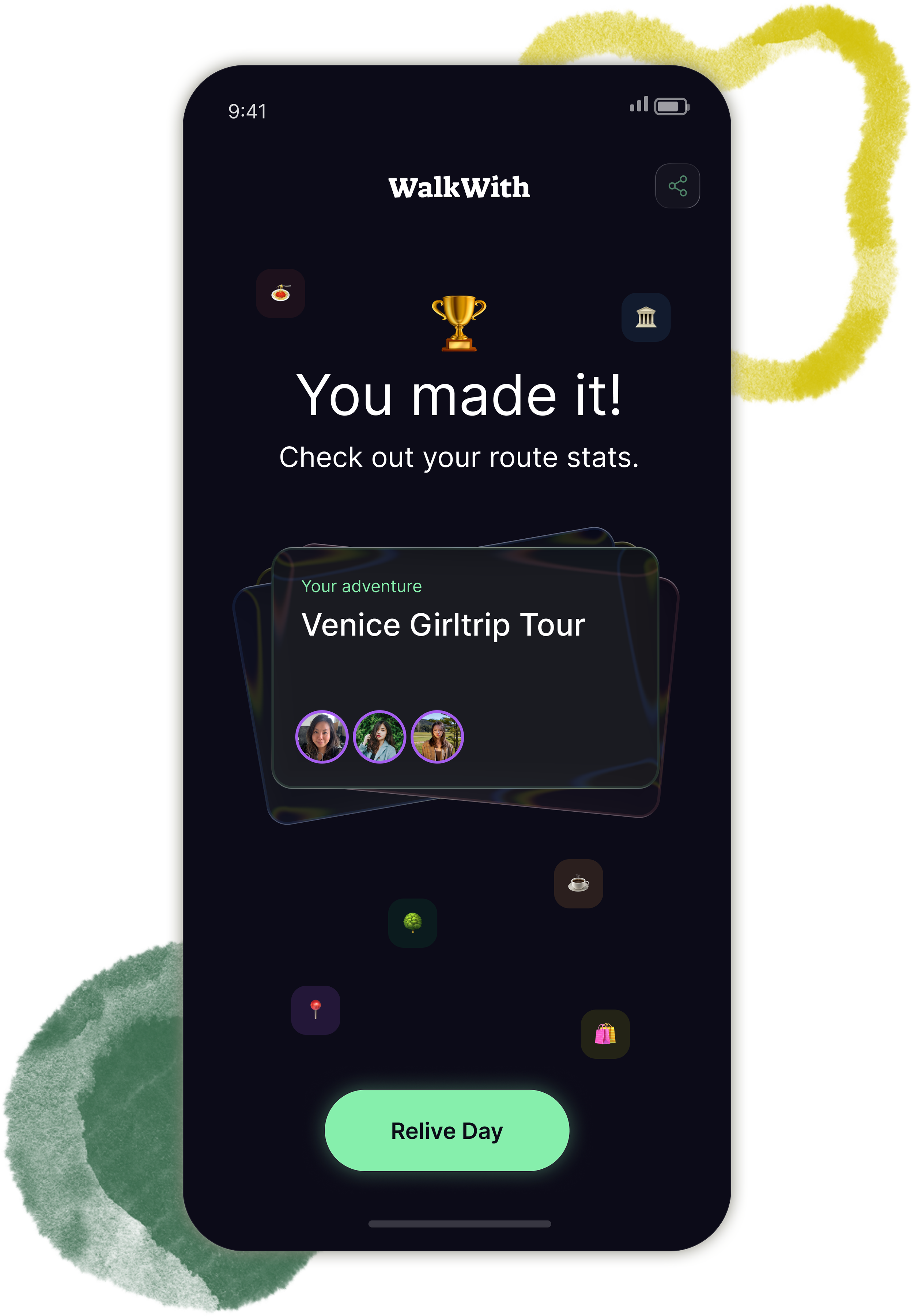
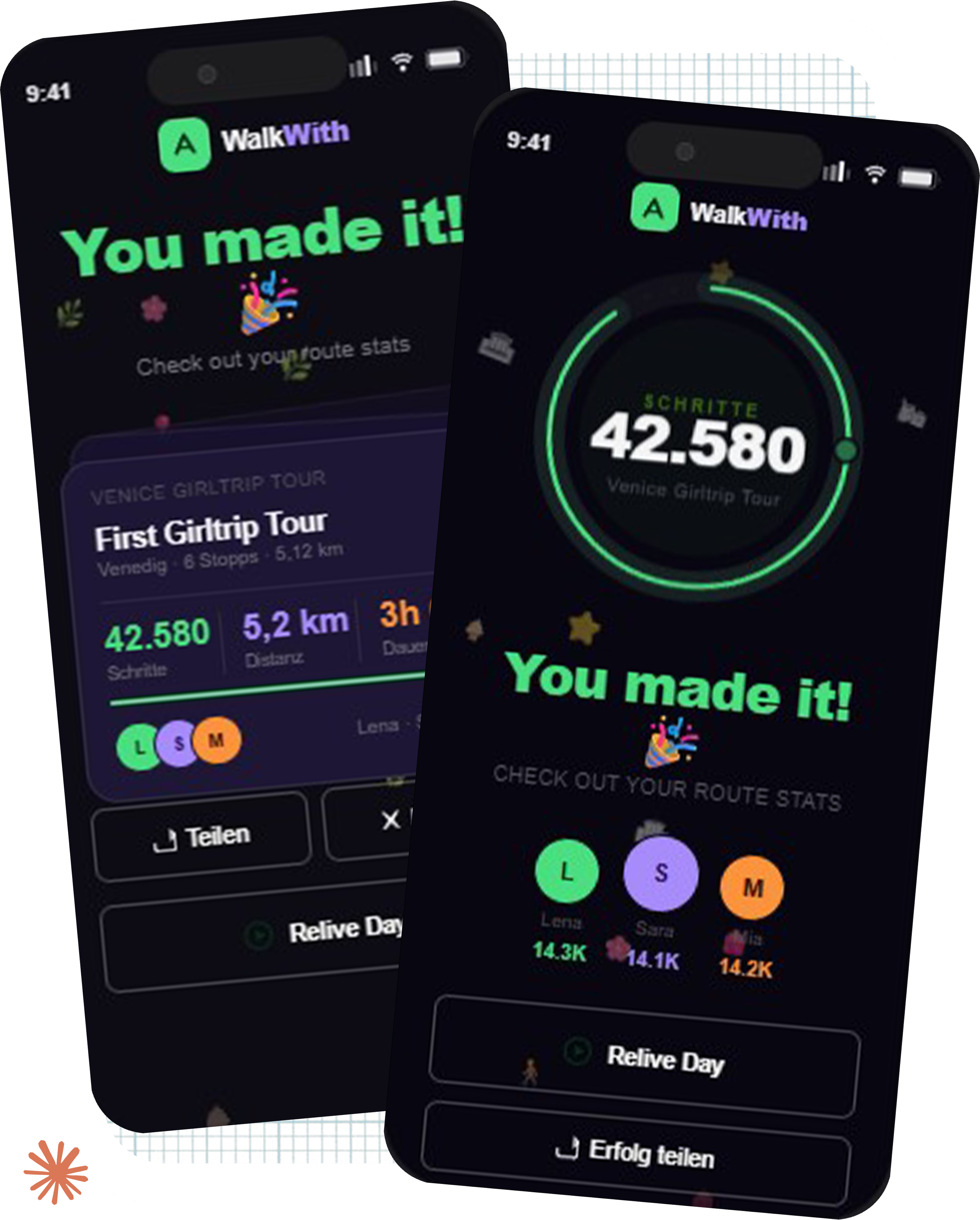
When GPS registers that the group has reached the final destination (back to Hotel), WalkWith prompts everyone to reveal their day. Nothing is shown upfront. The design creates the same pull as a Spotify Wrapped moment: You want to tap before you see what's inside.
Once revealed, the trip diary combines GPS data, uploaded group photos, timestamps and highlights into a shareable memory. The group can add photos immediately or upload them later. The result is something you'd actually want to send. Not a data export. A story.
AI in My Process
AI gave me fragments to react to. Knowing which fragments to keep and which to fix is the actual work.
Route Guide
The AI output centered weather information at the top of the screen. Weather is secondary information: Useful as context, not as the first thing you see while navigating in motion. I moved it to the bottom right and rebuilt the hierarchy around what matters when you're moving: Direction, distance, next stop.
The final version took two prompt iterations before I had enough structure to finish in Figma.
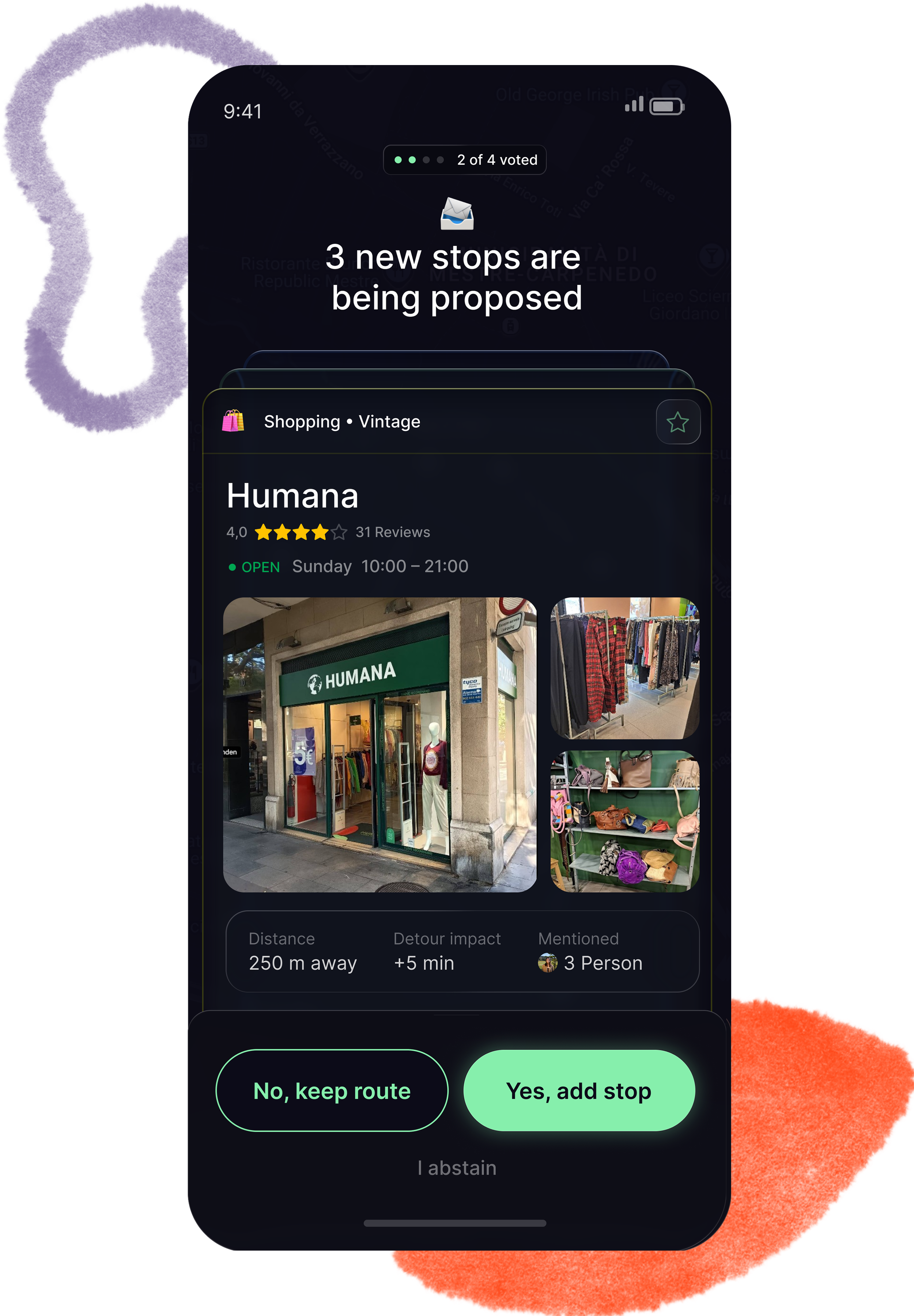
Anonymous Voting
The AI produced a single-card layout. In a group with multiple simultaneous proposals, a single card hides the problem: you don't know how many ideas are on the table. I restructured around a swipeable stack format so the group could see the volume of options and move through them quickly. The Tinder reference wasn't an aesthetic choice. It was a decision about how fast a group needs to reach consensus when they're standing on a street corner.
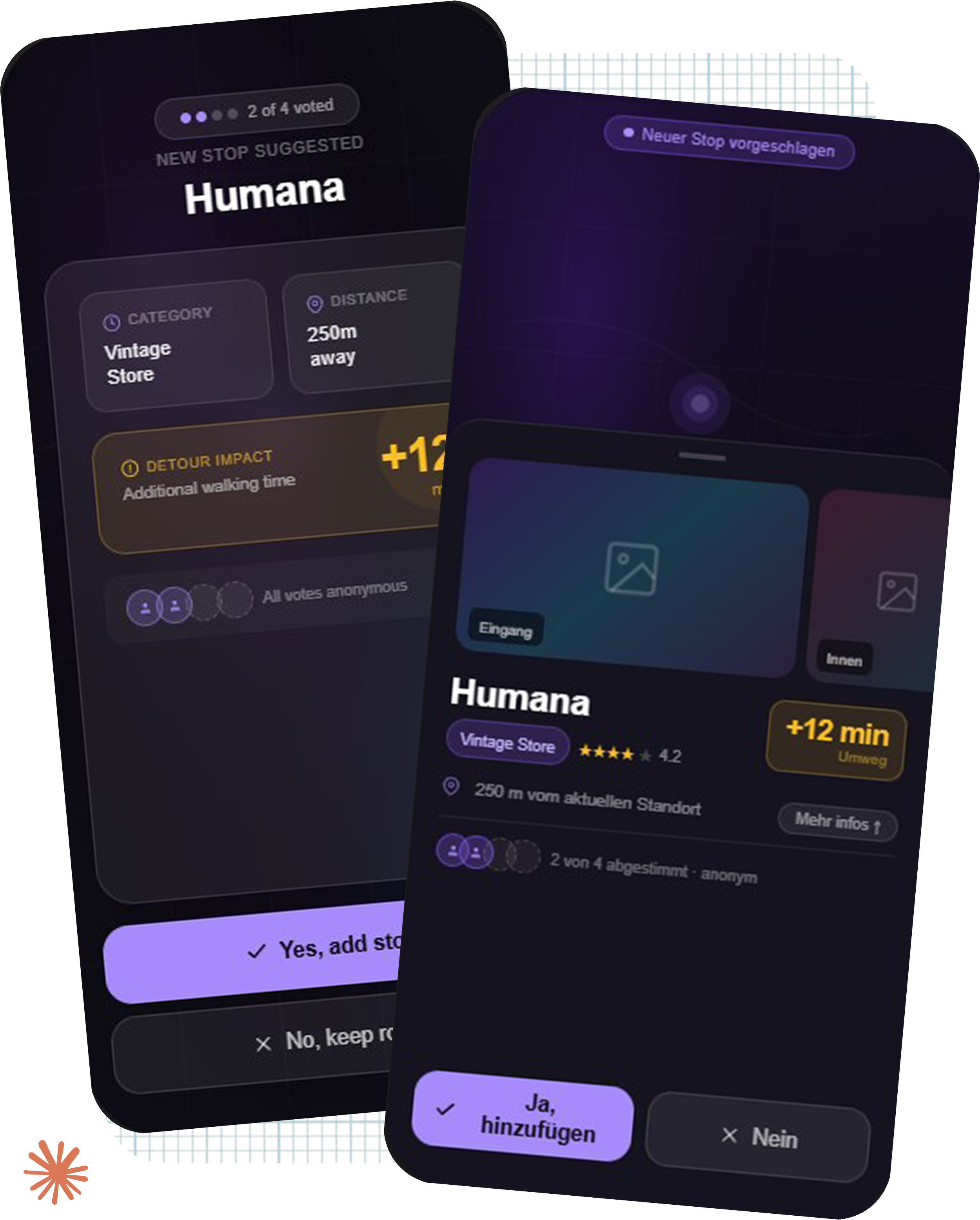
Achievement
The AI showed all statistics and trip information upfront. I removed everything. Nothing is visible until you tap. The reveal is the moment. Showing the data before the tap kills it.
-
The Transit-Pivot came from Japan and feet that gave out after too many kilometers. Anonymous Voting came from watching one loud person override a group of ten. The tagging system came from a sister whose dietary needs kept getting forgotten. Battery Handoff came from realizing that automatic role assignment creates new social problems instead of solving old ones.
Good product thinking doesn't start with frameworks. It starts with noticing what breaks and asking why.
-
The design work felt like a sprint. AI could take a rough brief and return a layout within minutes. But it returned fragments: Structurally plausible, contextually wrong. Knowing which rule to apply to fix each one is not something AI could do. That knowledge came from real trips, real friction, real moments where the plan collapsed.
-
The second prompt always produced better results than the first. Not because AI improved, but because articulating what was wrong with the first output forced more precision about what was actually needed. Prompt engineering turned out to be problem articulation. That is a transferable skill.
-
The design process was fast. Explaining why each decision was right took much longer, because the thinking happened quickly and intuitively. That gap between doing and explaining is something worth closing earlier in future projects.
Learnings
Closing
I was the one staring at my phone while my sisters were looking at the city.
WalkWith exists so that the next time someone plans a trip for the people they love, they can put their phone away.
Good design doesn't replace human judgment. It creates the conditions for it. Every feature in this system is built around one question: What needs to work so that the person navigating can stop thinking about navigation?
AI helped me move faster. But the decisions that made it real came from broken moments on real trips, with real people who trusted me to figure it out.